
- What Is The Two Bucket Method To Wash Car Properly - July 2, 2021
- 5 Best Car Seat For Grandparents That Impress Your In Laws - May 18, 2021
- 5 Best Rooftop Cargo Box For Audi Q5 [Review & Buying Guide] - May 11, 2021
Last Updated on June 11, 2023 by Chase Manhattan
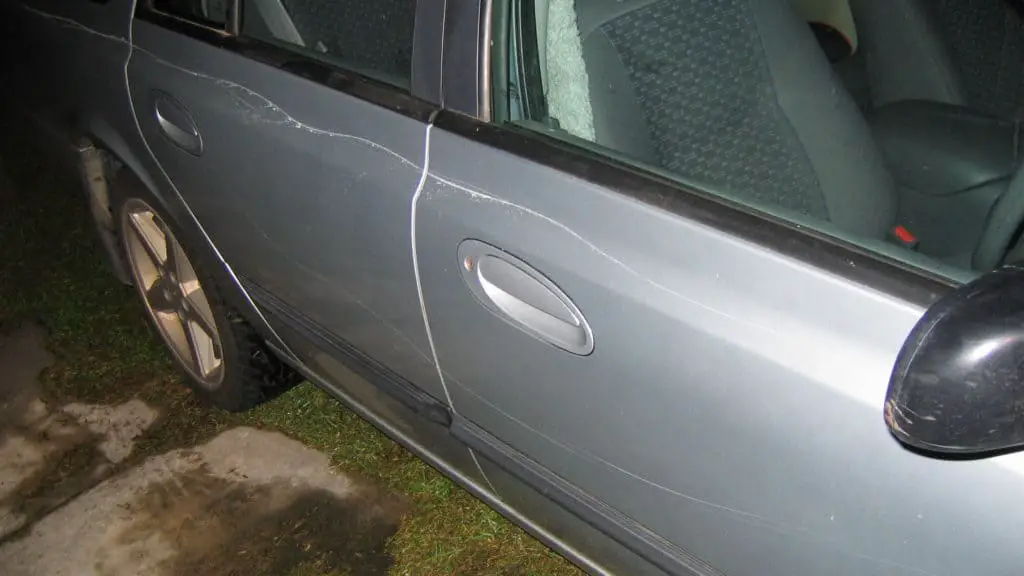
Car scratches can be a nuisance and lead to frustration for car owners.
The type of scratch can range from superficial scratches that are easy to fix, to deep scratches that require professional help. Knowing the difference between the three types of car scratches can help car owners identify the type of car scratch repair needed, the repair process, and the estimated repair cost.
Scratches can be divided into three categories: minor, deep and deeper. Light scratches are the least severe, while deeper scratches are the most severe. Understanding the severity of each scratch will help car owners determine the best course of action to take to fix the damage.
Let’s get into it.
[How To Fix A Keyed Car (Guide)]
The 3 different types of car scratches are:
- Clear coat scratches are the most common type of minor scratches, or surface level scratches, that occur on the outer layer of the car.
- Color coat scratches are deep scratches that end at the car’s base coat.
- Base coat scratches are deeper scratches that expose bare metal.
We’ll go into detail about the differences between the layers of a paint job, how to
[Six Common Causes of Car Scratches]
Quick Navigation
Different Types of Car Scratches
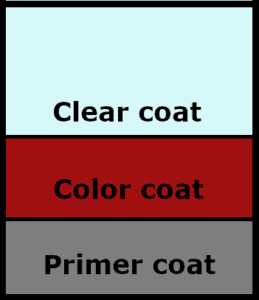
There are 3 layers that make up car paint.
The primer coat is the first paint layer on your car. It is applied to the metal surface of the car to prepare the surface for the remaining paint layers. It also adds a layer of protection to the metal beneath it.
The color coat, also called the base coat, is what gives the car its color. It is the thinnest layer of paint and its main purpose is to provide color.
The clear coat layer is the outermost layer of car paint. It is thick, transparent, and provides two main functions:
- Acts as a paint protection film by protecting paint beneath it from abrasion, sun-damage, and more.
- Gives the car a glossy, shiny appearance with a smooth surface.
Now that you fully understand the layers of paint and their functions, here are the 3 different types of car scratches.
[How To Remove Scratches From Black Plastic Bumpers]
1. Clear Coat Scratches
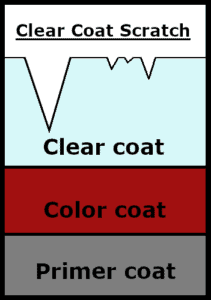
A clear coat scratch does not extend into the color (or base coat) layer, therefore do not remove any actual color. Rather, it reflects light unevenly from the surface, therefore becoming visible.
Due to the thickness of the clear coat, a clear coat scratch can be light or deep scratches. Both require different products and methods to fix but can be done by yourself at home depending on the type of car. Since clear coat scratches are so common, many companies like Meguiar’s, make a car scratch repair kit that is designed to treat your clear coat scratch at home.
To fix car scratches, you can either use a non gel toothpaste or apply a polishing compound in a circular motion over the scratch using a microfiber pad. Do it for a few minutes before inspecting the scratch again. If you’re more experienced, feel free to use a machine polisher with a scratch remover rubbing compound.
[How To Wax & Remove Scratches With A Buffer]These are the most common of the different types of car scratches as the clear coat is the outermost layer of car paint and frequently suffers from different types of wear and tear. You can identify this type of car scratch by performing the fingernail test.
They can be caused by many different things, such as improper washing, contact with the car (such as leaning against it), or grabbing a car door handle with keys in your hand.
It is very easy to scratch the clear coat; therefore you should be careful to avoid contacting it unless you’re washing the car.
2. Color Coat Scratches
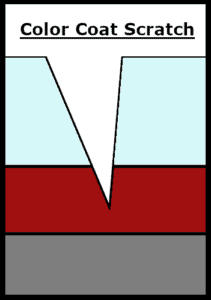
A color coat scratch is a deeper scratch than clearcoat scratches. This deep scratch will go through all of the paint layers in the cars paint job.
A color coat (or base coat) paint scratch will remove the color from the vehicle’s paint.
This means it will be more difficult to repair than a clear coat scratch, as the spot will need re-painted.
Although it is more advanced and may be better left to a professional, it can still be fixed at home with touch up paint and a few other materials.
[Guide to Removing Swirl Marks like a Pro]

Paint scratch are caused by moderate-heavy contact with hard objects. For example, they can be caused by hitting branches on the road while driving or someone “keying” your car.
Color coat scratches are typically unpreventable since they aren’t caused by simply rubbing against the paint or washing incorrectly.
They are usually caused by accidents or intentional damage from others.
[How To Stop Rust Bubbles From Spreading]
3. Primer Scratches
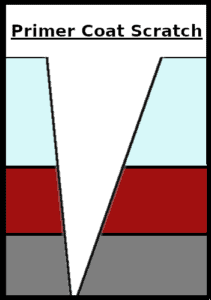
This is the base coat scratch, a deep scratch, that can cause much more damage when compared to the different types of car scratches and scratches in the color and clear coat layer. A base coat scratch, or primer scratch, cannot be repaired with a car scratch repair kit, it will need to be taken to an auto body shop to be repaired professionally.
A word of advice here, from experience, don’t attempt it at home even if you’re confident. It can look like it’s easy, but end up being much more difficult than expected. A professional repair shop will have the right tools, the know how, and therefore will get the best results without causing further damage. Additionally, they can give the care a close inspection while it is apart.
[Turtle Wax: Wax and Dry Review]
Primer scratches will rank as the worst scratch for your vehicle because it exposes the bare metal of the car’s body which rusts very quickly. If a primer scratch is left untreated, even for a few days, rust can start to form on the scratched area.
This can cause irreparable damage and make your car unsafe to drive over time. It will also affect the resale value of the car, as rust is extremely undesirable.
Primer scratches are caused by the same situations as color coat scratch, but they just extend further into the paint. Car accidents will typically yield deep car scratches, such as primer scratches.
If you think the primer scratch is not serious, you can try to use a body filler to level out the scratch with the rest of the car.
Otherwise, it is best to send the car for examination by the body shop immediately. It is important to stop rust from forming on the scratch as soon as possible.
4. Glass Scratches
Glass scratches are a type of scratch that occurs only on the glass of the car. This is typically from an unexpected event like a rock or an accident, but can also develop from consistent abrasions like rubbing against the material consistently; like when removing wax from a windshield.
[10 Best Electric Buffer For Car Waxing And Buying Guide]
Best Products to Fix Paint Scratches
As we’ve discussed, most of the different types of car scratches can be mixed at home. Some cannot, and you should visit a professional auto body repair shop. However, if you’re able to fix the scratch at home, there are a few quality products that will make it easier to do so.
Turtle Wax Premium Clear Coat Scratch Repair Kit
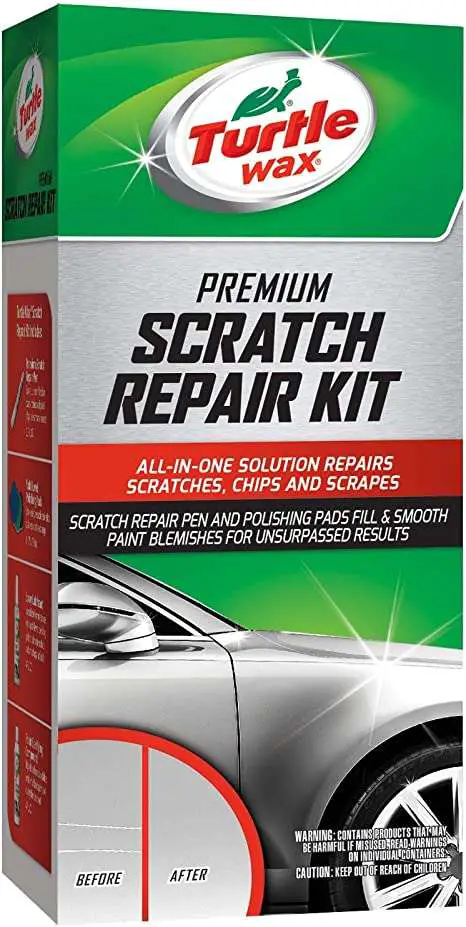
Turtle Wax is a company that has been around for a long time and makes comparable products to companies like Chemical Guys and Adam’s detailing. This car scratch repair kit includes:
- 3 x Foam Applicator Pad
- 1 x Bottle of Polishing Compound
- 1 x Lubricant for the Car’s Paint Job
With Turtle Wax’s product, you can easily remove a surface level scratch, like swirl marks, with a thin layer of product, a microfiber cloth, and a little bit of know how. In terms of the polishing product, it is best to start small and work up in size with each new layer. I prefer to use three layers of product, each time following the same procedure as the last. This will apply to any common type of car scratches. A clear coat scratch, or other minor scratches, don’t stand a chance.
Frequently Asked Questions
What is Paintless Dent Repair
Paintless Dent Removal (PDR) is a process of removing minor dents, dings, and creases from a car’s body without the need for traditional body shop methods such as sanding, bondo, and painting.
It is a cost-effective and fast way of restoring a vehicle to its original condition. The process involves using specialized tools to push the dent out from the inside of the panel, which enables the panel to return to its original shape. This method of repair does not require any paint or body filler, and so does not damage the factory finish of the car.
It is the preferred method of repair for most dealerships and body shops. It is also suitable for minor dents and dings, minor hail damage, and small paint scratches. However, this method is not suitable for major scratches, and if the damage is too severe, then touch up paint may be required.
Can a Glass Scratch Be Repaired
Yes, glass scratches occur and can be repaired. Depending on the type of glass and the severity of the scratch, the repair may range from a simple glass polishing process to a more complex glass replacement.
When a sharp object causes a scratch on the glass surface, it affects the clarity of the glass and makes it look unattractive. However, with the scratch remover and techniques, it is possible to restore the glass surface to its original condition. The scratch remover repair process may include polishing the scratched glass surface with diamond abrasives, filling the scratch with a high-viscosity resin, and then curing the resin with special UV rays.
This process can effectively repair the glass surface and restore its clarity and appearance. In some cases, if the scratch is too deep and extensive, it may require a complete replacement of the damaged glass.
Rain X Glass Scratch Repair Kit
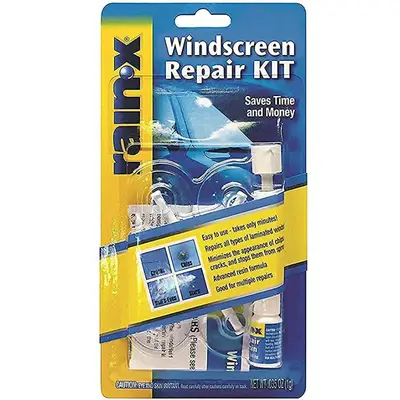
Rain X is a company that has been making automotive protection products for many years now. This Glass Scratch Repair Kit includes:
- 1 Bottle of resin
- 1 Applicator Brush
- 2 Curing Strips
Pro Tips from Rain X:
- For Best Results – Glass Scratch Repairs Should Be Made As Soon As Possible After The Damage Occurs And Before The Break Has Had A Chance To Be Contaminated By Dirt Or Water
- Pro-Tip To Avoid Poor Results – Refrain From Applying Resin Too Quickly, Air Pockets Forming During The Repair Or Repairing On A Contaminated Crack As This May Compromise Your Results
Can You Fix Wheel Scratches
A wheel scratch, also known as curb rash, can be an eyesore on your vehicle, making it look outdated and worn out. Though it may seem like a daunting task to repair the damage, it is possible to remove a wheel scratch by yourself with the right car scratch remover products.
The first step in fixing a wheel scratch is to assess the damage. If the scratches are deep, they may require professional attention. However, if the scratches are shallow, you can repair them yourself.
You’ll need a few supplies, such as sandpaper, a buffing wheel and rubbing compound, and a sealant.
The best way to remove a wheel scratch:
Start by sanding the affected area with a 600-grit sandpaper to even out the surface. Then, use a buffing wheel to apply a small amount of the compound and remove the scratches. Finally, apply a sealant to protect the wheel from further damage.
Wheel scratches affect the overall appearance of your vehicle and can be difficult to repair. However, with the right tools and supplies, you can fix wheel scratches yourself and restore your vehicle’s original beauty. It’s important to use the correct products and techniques to ensure that the job is done correctly and that the wheel is properly protected. Using the right products and techniques will help prevent further damage and ensure that the wheel looks as good as new.
Common Causes of Car Scratches
Car scratches are extremely common and there are many different causes.
Here are a few of the most common causes for car scratches.
Improper Washing
Washing your car incorrectly is probably the most common cause of car scratches.
Car paint is much more delicate than you’d think, and it can become scratched very easily.
If you don’t use proper methods when washing your car, dirt can become trapped on your sponge, scratching the paint and developing swirl marks.
Additionally, using the wrong materials, such as an old t-shirt as a wash rag instead of soft microfiber cloths damages your paint immensely by filling it with scratches.
Not only is your car susceptible to scratches during hand-washing, but automatic car washing can also cause a ton of damage to your car’s paint. You can read about this in detail by clicking here.
Rocks and Road Debris
Scratches and chips are commonly caused by rocks and road debris.
Obviously, rock chips occur when pebbles and stones are launched into the air by another car, then hitting your car and leaving damage.
Flying rocks are not the only way your car can become scratched while driving, as road debris can also damage your paint.
Hitting road debris, such as a stick in the road, loose tire tread, or similar items can cause scratches when they come in contact with your car.
These can often be avoided by paying close attention to the road while driving, but sometimes are unpreventable.
You can also consider getting a paint protection film with a ceramic coating which will be able to protect your vehicle from all the flying rocks and road debris mentioned above.
Car Accidents
This is the most obvious cause of car scratches, as you can’t really get into a car accident without resulting in many scratches.
They are caused by the car’s surface coming in contact with a solid object, such as another car.These scratches are often concentrated in the area of impact and extend deep into the car’s paintwork.
If you have insurance, the repair cost for any deep scratches and dent will most probably be covered by them
Preventing Scratches
Although scratches are very common, you can take steps to help avoid and prevent them.
A great way to help protect the paint from light clear coat scratches is to apply a wax layer.
A wax layer will add a thin protective layer to further protect your car’s clear coat. Although it won’t protect against deep scratches, it may help prevent against light scratch.
You can either do it using your hand or use an electric buffer which is faster and more effective.
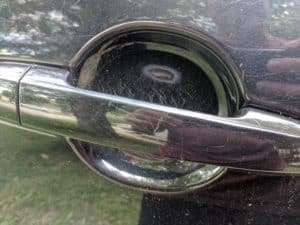
Another way to prevent scratches is to learn how to wash your car properly. Hand washing incorrectly is one of the most common ways for a car to become filled with scratches.
Hand washing is not the only way your car’s paint can become damaged through washing. Improper washing techniques used by automatic car washes can also cause massive amounts of damage and severe scratch to your paint, especially touch car washes.
You should also be aware of areas that are commonly scratched, such as door handles. Identify the areas where your car is scratched and try to figure out what might be causing the scratches.

